Educational Objectives
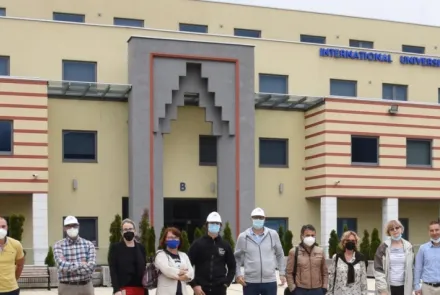
The objectives of the first cycle (BSc) Mechanical Engineering programme at the International University of Sarajevo are to prepare graduates who can successfully operate in diverse industrial, academic, and societal contexts, and to provide them with a strong foundation for lifelong learning and professional growth. Specifically, the programme aims to:
- EO1 Provide high quality education in Mechanical Engineering for its students.
- EO2 Develop students' capabilities in assessing engineering options across a broad range of subjects, their capacity to make decisions, and their creativity and flair.
- EO3 Foster students' capacity to deal with situations that cross subject boundaries by providing a multi-disciplinary environment.
- EO4 Give education to the students in a broad spectrum and prepare them for a career in a wide range of fields.
- EO5 Promote professional and ethical responsibility.
These objectives align with the BiH Qualifications Framework (BHQF), the Qualifications Framework of the European Higher Education Area (QF-EHEA), the European Qualifications Framework (EQF) at Level 6, and the Subject-Specific Criteria (SSC) for Mechanical Engineering.
Learning Outcomes
Upon successful completion of the programme, graduates will have achieved the following learning outcomes:
- LO1 Demonstrate knowledge of mathematics, science, and engineering as a foundation for understanding matters in the field of mechanical engineering.
- LO2 Possess sound discipline-specific knowledge, including Mechanics of Solids and Fluids, Engineering Materials, Thermodynamics, Heat and Mass Transfer, Manufacturing Methods, and Machine Elements.
- LO3 Apply acquired knowledge to mechanical engineering situations.
- LO4 Use techniques, skills, and modern engineering tools necessary for mechanical engineering practice and interpret results with critical thinking.
- LO5 Identify and formulate mechanical engineering problems by converting real-life situations into approximate models, applying analytical and/or computational methods to solve them with the required degree of precision.
- LO6 Design mechanical systems, components, or processes to meet desired needs while considering realistic constraints such as risk assessment, economic, environmental, legal, social, political, ethical, sustainability, health and safety, quality, and manufacturability.
- LO7 Analyse existing mechanical systems, components, or processes from mechanical and financial perspectives; conduct experiments where necessary to obtain relevant data.
- LO8 Locate and use relevant technical literature and information sources.
- LO9 Demonstrate broad knowledge of contemporary issues, with special focus on sustainability, professionalism, social responsibility, ethics, conflict resolution, multicultural society, and emotional intelligence.
- LO10 Work effectively in teams at all levels, and take on leadership roles when required.
- LO11 Recognise the importance of lifelong learning and engage in extracurricular activities for professional and personal development.
- LO12 Communicate and document effectively in English and in their mother tongue, presenting professional work using modern technical and visual means.